
 Fix firstFailed battery recall check, no proof of the fixSeptember 2026 · Plug-in hybrid
All real cases
Buy it September 2026 · Electric
2021 Kia Niro EV with 95,178 km and a battery still at 100% health
100% battery health after 95,178 km
95,178 km (verified)Displayed mileage
100%, 64.8 kWh of 64.8 kWhBattery health
0 mV, every cell 4.120 VCell spread
Dirty, smelly and kerbed, but honest underneath: original paint on every panel and a 64 kWh battery certified at 100% after 95,178 km.
Photos from the inspection 6
This 2021 Kia Niro EV had covered 95,178 km, well above average for its age, and it was very dirty inside and out with a smell in the cabin. Underneath the neglect was an honest car: original paint on every panel and a high-voltage battery independently certified at 100% State of Health, with every cell reading exactly the same voltage.
The car
The larger 64 kWh version of the Niro EV, with a 150 kW (201 hp) motor driving the front wheels through a single-speed automatic. It was supplied new in Ireland in January 2021 and has had two owners. Both history checks were clean: no finance, no write-off or damage record, no theft marker and no taxi use. One history check listed the model at 100 kW, which is the figure for the smaller 39 kWh version; the certified 64.8 kWh capacity and the pack voltage read from the car confirmed this is the 64 kWh car. There was no service book on the day, and one key.
What we found
Battery health. The battery was assessed twice. An independent certificate and the car's own battery management unit both returned 100% State of Health, with 64.8 kWh usable out of 64.8 kWh when new. The highest and lowest cells both read 4.120 V, a spread of 0 mV. Isolation resistance was 1,000 kOhm, the four modules were evenly at 14°C, and available charge power was 65.37 kW. Certified range in mixed use was 432 to 478 km in summer and 349 to 385 km in winter.
Tyres. The matching set of Dunlops measured 3.07 mm to 3.84 mm, which is legal, but the rubber was cracking with age. Cracked rubber hardens and grips less in the wet whatever tread is left, so we recommended four new tyres before winter, with the tracking set at the same time.
Cosmetic wear. Light scratches over the whole car, deeper scratches on both bumpers, a cracked black lower section on the front bumper, scratched mirror caps, sun-faded roof rails, kerbed alloys and a small tear in the boot seal. The interior was complete and undamaged but very dirty. We traced the smell to the dirt itself, with no sign of damp, a water leak or mould.
Diagnostics. 24 control units were scanned and only one code was stored: a historic communication time-out between the charging control unit and the on-board charger. It was not active, both units reported healthy, and a further check after the road test found no new faults. The five power electronics fault counters all read zero, meaning no over-current, over-voltage, over-temperature or short circuit event in the life of the car. Charging was not tested during the inspection, so we advised charging the car once before handover, then clearing the code and re-scanning.
Brakes. The pads were only 10% worn front and rear. The rear discs, at 40% worn, were the most used item, worth watching at future services but nowhere near replacement.
What it would cost
The total estimate was €1,360 to €2,360, and none of it was a condition of purchase. The largest items were four tyres at €480 to €720, the front bumper repair at €250 to €500 and a machine polish at €200 to €350. Alignment (€70 to €120), a full valet (€150 to €250), the rear bumper (€150 to €300) and a boot seal (€60 to €120) make up the rest.
Our verdict
Pass, recommended for purchase, with no conditions. Every fitted airbag circuit read within its normal range with no sign of deployment or repair, the suspension was dry with no play, and the mileage matched the Irish registers, rising steadily at about 17,000 km a year. The road test was excellent: smooth, immediate power, straight braking, no vibration, and regenerative braking that blended cleanly into the normal brakes. The battery remains inside Kia's warranty until January 2028 or 150,000 km, whichever comes first. This car needed money spent on presentation and tyres, not on repairs.
Buying a used Niro EV in Ireland: what to check
- Get the battery State of Health measured and keep the certificate. It is the most expensive part of the car and the biggest variable in its value.
- Confirm which battery you are buying. The 39 kWh and 64 kWh versions look alike, and history data can mix up the specification.
- Premature 12V battery failure is a known weak point on this model, so check the 12V readings on a scan.
- Ask a Kia dealer to check recalls by VIN. A battery management software recall covers cars built between May 2020 and March 2022.
- Charge the car in front of you at least once, since on-board charger failure is among the known issues listed for this model.
A dirty car can hide a very good one, and a clean car can hide a tired battery, which is why the certificate and the scan told us more than the first impression did.
2021 Kia Niro EV
Buy it Pass, recommended for purchase
- Displayed mileage
- 95,178 km (verified)
- Battery health
- 100%, 64.8 kWh of 64.8 kWh
- Cell spread
- 0 mV, every cell 4.120 V
- Fault codes
- 1 historic, 0 active
- Cost to put right
- €1,360 to €2,360 (none required)
- Verdict
- Pass
Written from our inspection report. Registration, VIN, the client and the seller are kept private.
More real cases
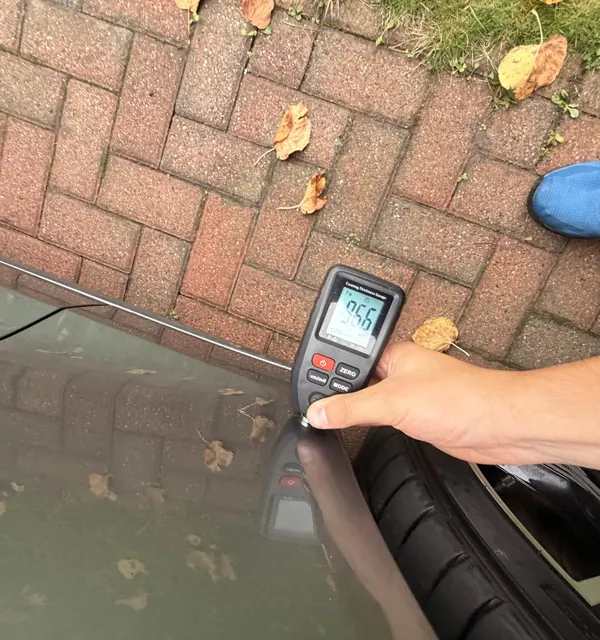
Fix firstFailed battery recall check, no proof of the fixSeptember 2026 · Plug-in hybrid Fix first936 µm on the rear door, and no repair recordSeptember 2026 · Plug-in hybrid
2023 Volvo XC90 T8 with a replaced rear drive unit and no repair record
936 µm on the rear door, and no repair recordAn excellent battery and a smooth engine, but the rear electric drive unit had been replaced with no paperwork, and the car pulled hard to the left.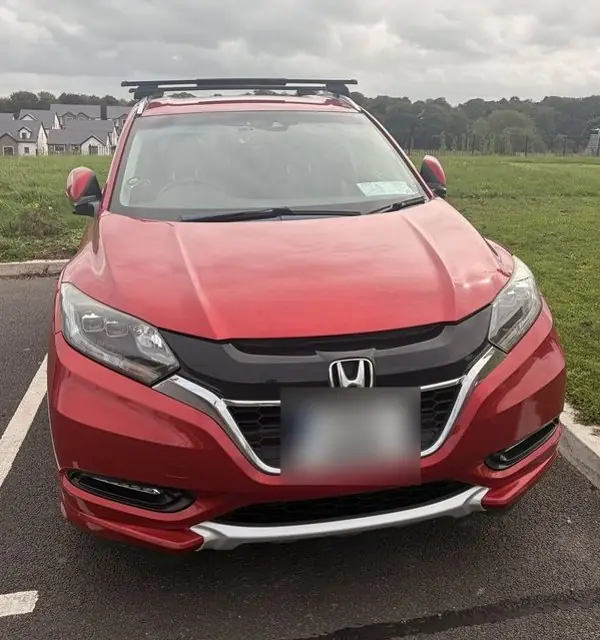 Walk away968 µm of filler in a rear door. Factory paint is 80 to 160 µmSeptember 2026 · Hybrid · Japanese import